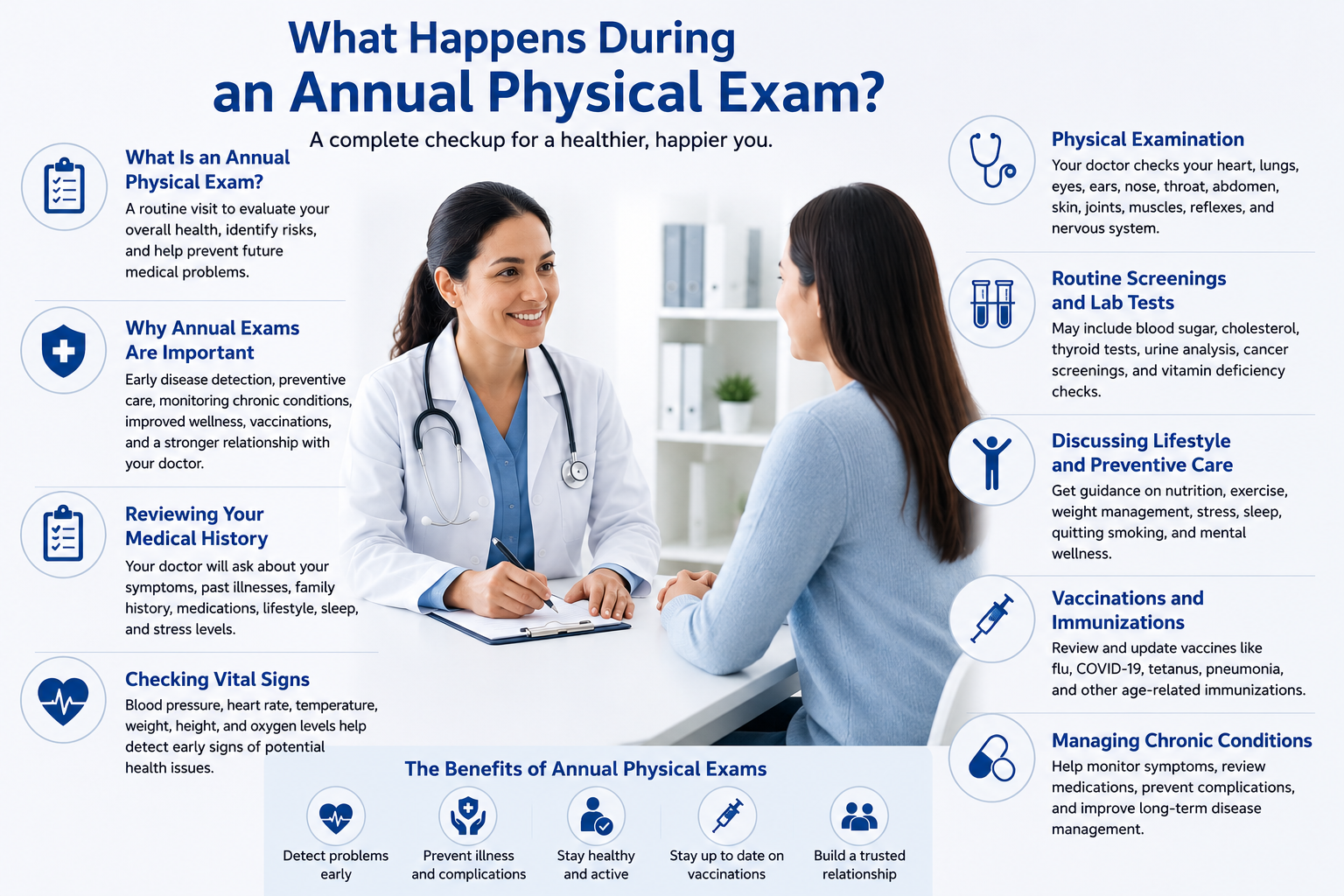
What Is an Annual Physical Exam?
An annual physical exam is a routine healthcare visit focused on evaluating your overall health. It is designed to monitor your physical condition, identify possible risk factors, and help prevent future medical problems.
During the appointment, your doctor reviews your medical history, performs a physical examination, and may recommend screenings or lab tests based on your age, lifestyle, and health condition.
Annual exams are important for people of all ages, even if they feel healthy.
Why Annual Physical Exams Are Important
Routine health checkups provide many long-term benefits, including:
- Early disease detection
- Preventive healthcare support
- Monitoring chronic conditions
- Improving overall wellness
- Updating vaccinations
- Building a relationship with your doctor
Many health conditions such as high blood pressure, diabetes, and high cholesterol can develop without obvious symptoms. Annual exams help identify these issues before they become more serious.
Reviewing Your Medical History
One of the first steps during an annual physical exam is reviewing your medical history. Your doctor may ask questions about:
- Current symptoms or concerns
- Past illnesses or surgeries
- Family medical history
- Medications and supplements
- Lifestyle habits
- Sleep patterns and stress levels
Providing accurate information helps your doctor better understand your health risks and create personalized care recommendations.
Checking Vital Signs
Vital signs help measure important body functions and provide insight into your overall health.
Common vital sign checks include:
- Blood pressure
- Heart rate
- Body temperature
- Weight and height
- Oxygen levels
These measurements can help detect early signs of conditions such as hypertension, infections, or heart-related issues.
Physical Examination
Your doctor will perform a physical examination to evaluate different parts of your body and look for any unusual signs or symptoms.
The exam may include checking:
- Heart and lungs
- Eyes, ears, nose, and throat
- Abdomen and digestive health
- Skin condition
- Joints and muscles
- Reflexes and nervous system function
The goal is to identify potential health concerns and ensure your body is functioning properly.
Routine Screenings and Lab Tests
Depending on your age, health history, and risk factors, your doctor may recommend certain screenings or lab tests.
Common tests may include:
- Blood sugar testing
- Cholesterol screening
- Thyroid function tests
- Urine analysis
- Cancer screenings
- Vitamin deficiency checks
These tests help detect underlying health conditions early, often before symptoms appear.
Discussing Lifestyle and Preventive Care
Annual physical exams are also an opportunity to discuss healthy lifestyle habits and preventive healthcare strategies.
Your doctor may provide guidance on:
- Nutrition and healthy eating
- Exercise and physical activity
- Weight management
- Stress reduction
- Sleep improvement
- Smoking cessation
- Mental wellness
Preventive care recommendations can help improve your quality of life and reduce future health risks.
Vaccinations and Immunizations
Routine wellness exams often include reviewing your vaccination history to ensure you are protected against preventable illnesses.
Your doctor may recommend:
- Flu vaccines
- COVID-19 boosters
- Tetanus shots
- Pneumonia vaccines
- Other age-related immunizations
Keeping vaccinations updated is an important part of preventive healthcare.
Managing Chronic Conditions
If you already have a chronic condition such as diabetes, asthma, or high blood pressure, annual exams help monitor your progress and adjust treatment plans when needed.
Regular checkups allow your doctor to:
- Track symptoms
- Monitor medications
- Prevent complications
- Improve disease management
Consistent care is essential for maintaining long-term health.