
Blog
BHRT vs. Synthetic Hormones: Key Differences You Should Understand

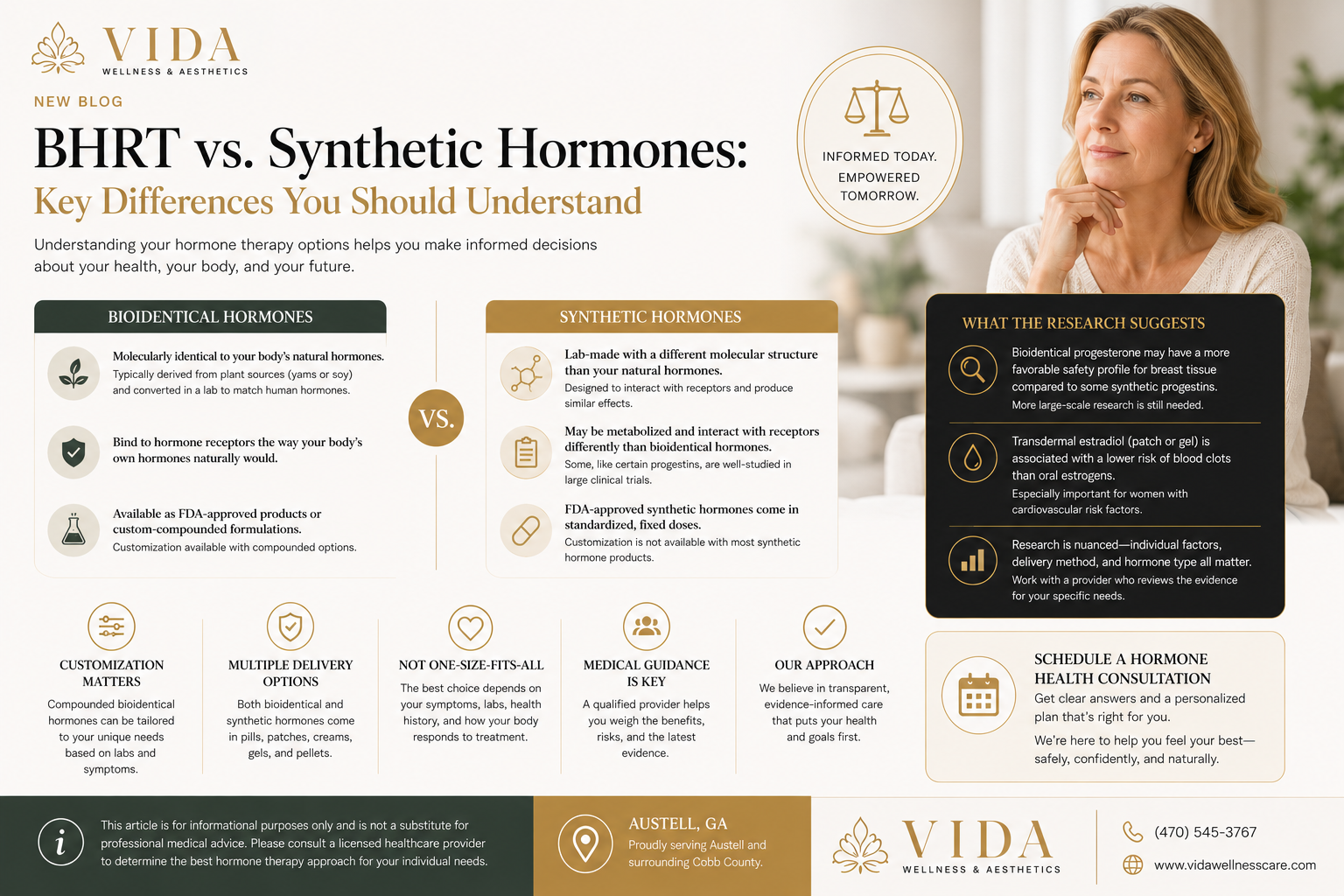
Hormone replacement therapy has helped countless men and women manage symptoms of menopause, andropause, and other hormone-related changes. But once you start researching your options, you will quickly run into two terms that are often discussed side by side: bioidentical hormone replacement therapy (BHRT) and synthetic hormone therapy. At Vida Wellness & Aesthetics, we get asked about this distinction frequently, and understanding it can make a real difference in how you approach your own hormone health.
What “Bioidentical” Actually Means
Bioidentical hormones are defined by their molecular structure: they are chemically identical to the hormones your body naturally produces. When a lab analyzes bioidentical estradiol, progesterone, or testosterone, the molecule is indistinguishable from what your own body makes. Because hormone receptors throughout the body are shaped to recognize very specific molecular structures, much like a lock that only fits a particular key, bioidentical hormones bind to those receptors in the way your body’s own hormones naturally would.
Bioidentical hormones are typically derived from plant sources, most commonly yams or soy, which are processed in a lab to create molecules that exactly match human hormones. It is worth noting that “bioidentical” describes molecular structure, not whether a hormone is unregulated. FDA-approved bioidentical options exist on the market, including well-known products containing estradiol and micronized progesterone, separate from compounded bioidentical formulations prepared by compounding pharmacies.
What “Synthetic” Actually Means
Synthetic hormones are also manufactured in a lab, but they are intentionally designed with a different molecular structure than what your body naturally produces. They are built to interact with the same hormone receptors and produce similar effects, but because the structure is not an exact match, the way they are metabolized and how they interact with receptors can differ. Some synthetic hormones, particularly certain progestins, have been more heavily studied in large clinical trials, including older but influential research like the Women’s Health Initiative.
A common point of confusion is that all hormones, bioidentical or synthetic, are technically manufactured. Neither type is “natural” in the sense of being extracted directly and unaltered from a plant or animal source. The real distinction is structural, not how processed each one is.
What the Research Suggests
The evidence comparing bioidentical and synthetic hormones is more nuanced than marketing on either side often suggests. Some observational research has found that bioidentical progesterone may carry a more favorable safety profile related to breast tissue compared to certain synthetic progestins, though researchers note that more conclusive, large-scale data is still needed. Separately, multiple studies have found that transdermal estradiol, delivered through the skin via patch or gel, is associated with a lower risk of blood clots than oral estrogen formulations, which is particularly relevant for women with elevated cardiovascular risk factors.
It is important to understand that this research relates primarily to the route of administration and specific hormone types being compared, not a blanket claim that “bioidentical is always safer than synthetic” in every context. A qualified provider should walk you through what the current evidence actually shows for your specific hormone needs, rather than relying on generalized claims.
How Treatment Customization Differs
One practical difference patients often notice involves customization. Compounded bioidentical hormones, prepared by compounding pharmacies, can be tailored to a patient’s specific dose and combination of hormones based on lab work and symptoms. FDA-approved synthetic hormone products, by contrast, are manufactured in fixed, standardized doses. Some FDA-approved bioidentical products are also available in standardized doses, so customization is not exclusively a “bioidentical” feature; it depends on whether the specific product is compounded or manufactured commercially.
Customization can be an advantage for patients who need precise, individualized dosing, but it also means compounded formulations do not go through the same FDA review process for batch consistency and quality control as commercially manufactured products, whether bioidentical or synthetic.
Delivery Methods for Both Options
Both bioidentical and synthetic hormones are available in a range of delivery methods, including oral pills, transdermal patches, topical creams or gels, and subcutaneous pellets. The right delivery method depends on factors like your specific hormone levels, cardiovascular risk profile, lifestyle preferences, and how consistently you want hormone levels maintained throughout the day or week.
Making the Right Choice for You
There is no universal answer to whether BHRT or synthetic hormone therapy is “better.” The right choice depends on your specific symptoms, hormone lab values, personal and family health history, and how your body responds to treatment once started. This is exactly why hormone therapy should never be approached as a one-size-fits-all decision or chosen purely based on marketing language like “natural” versus “synthetic.”
Our Approach at Vida Wellness & Aesthetics
At Vida Wellness & Aesthetics, our hormone therapy consultations start with a full evaluation of your symptoms, lab work, and health history before recommending any specific approach. We believe in transparent, evidence-informed care, helping you understand the real differences between your options so you can make a confident, informed decision about your hormone health.
Schedule a Hormone Health Consultation
If you are exploring hormone replacement therapy and want a clear, judgment-free conversation about bioidentical versus synthetic options, reach out to Vida Wellness & Aesthetics to schedule your consultation.
This article is for informational purposes only and is not a substitute for professional medical advice. Please consult a licensed healthcare provider to determine the best hormone therapy approach for your individual needs.