
Blog
What Happens During an Annual Physical Exam? Keywords

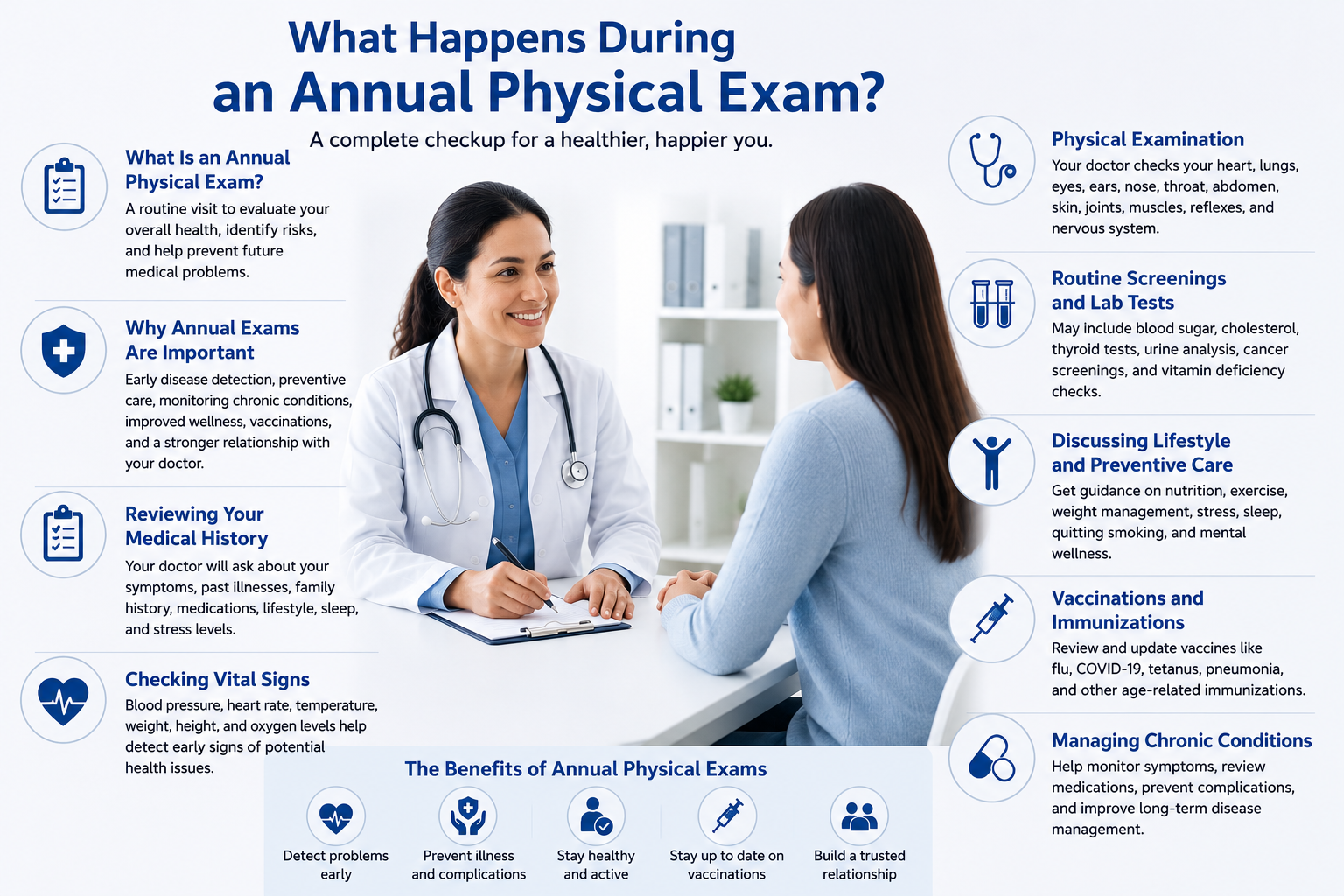
What Is an Annual Physical Exam?
An annual physical exam is a routine checkup with your primary care provider, even when you feel perfectly healthy. Its purpose is to catch potential issues early, update your preventive care, and build a long-term relationship with a provider who knows your history. If you have ever wondered what actually happens during the visit, this guide walks you through it step by step.
Why an Annual Physical Exam Matters
Many health conditions, such as high blood pressure, high cholesterol, and early type 2 diabetes, can develop without obvious symptoms. A yearly exam helps your provider:
- Spot changes in your health early
- Track your numbers (blood pressure, weight, lab results) over time
- Review and update vaccines and screenings
- Discuss lifestyle habits like sleep, stress, nutrition, and exercise
- Manage ongoing conditions and medications
Step-by-Step: What Happens at Your Visit
1. Check-In and Health History
You will update your personal and family medical history, current medications and supplements, allergies, past surgeries, and any new symptoms or concerns. Your provider may also ask about lifestyle topics such as diet, activity, sleep, alcohol, tobacco, and mood.
2. Vital Signs
A nurse or medical assistant typically measures:
- Blood pressure
- Heart rate and pulse
- Temperature
- Height and weight (and BMI, if relevant)
- Oxygen level, in some cases
3. The Physical Examination
Your provider will usually examine:
- Head, eyes, ears, nose, and throat
- Neck: including lymph nodes and thyroid
- Heart and lungs: listening for rhythm, breathing, and any unusual sounds
- Abdomen: checking for tenderness or abnormalities
- Skin: looking for changes or concerning spots
- Muscles, joints, and reflexes
- Additional exams based on your age, sex, and history
4. Screenings and Lab Work
Depending on your age, risk factors, and medical history, your provider may recommend:
- Blood tests (such as cholesterol and blood sugar)
- Urinalysis
- Cancer screenings
- Mental health screening
- Vaccine updates
Not everyone needs the same tests. Your provider tailors recommendations to you.
5. Discussion and Personalized Plan
This is the most valuable part. You review your results, ask questions, and agree on next steps, such as lifestyle changes, follow-up visits, referrals to specialists, or medication adjustments.
How to Prepare for Your Annual Physical
- Write down your questions and concerns so you don’t forget them.
- Bring a list of medications and supplements with doses.
- Gather your records: past test results, vaccination records, or notes from other providers.
- Know your family history of conditions like heart disease, diabetes, or cancer.
- Ask about fasting. Some blood tests require it, so confirm when you book.
- Wear comfortable clothing that is easy to remove or adjust.
- Bring your insurance card and ID.
How Often Should You Get a Physical?
Many adults benefit from a yearly checkup, but the right schedule depends on your age, health conditions, and risk factors. Your provider can tell you what is appropriate for you.
Does Insurance Cover an Annual Physical?
Many insurance plans cover preventive visits, but coverage differs between plans. Some additional tests may be billed separately. It is a good idea to check with your insurance company or our front desk before your appointment.
Frequently Asked Questions
Do I need a physical if I feel healthy?
Yes, it is often recommended. Preventive visits help find issues before symptoms appear.
How long does an annual physical take?
It varies, but many visits last from 30 minutes to an hour, depending on your history and any tests needed.
Do I need to fast before my physical?
Only if blood tests such as fasting glucose or cholesterol are planned. Confirm with the clinic when you schedule.
What is the difference between an annual physical and a sick visit?
An annual physical is preventive and focuses on overall health. A sick visit addresses a specific, current problem.
Can I discuss other concerns during my physical?
Yes. Bring up anything on your mind, including sleep, stress, weight, hormones, or skin concerns. If something needs more time, your provider may schedule a follow-up.
What if my results are abnormal?
Your provider will explain what the results mean and recommend next steps, which may include further testing or lifestyle changes.
Schedule Your Annual Physical Exam in Austell, GA
Preventive care is one of the best investments you can make in your long-term health. At Vida Wellness & Aesthetics in Austell, GA, our team takes the time to listen, answer your questions, and build a plan that fits your life.
[Book Your Appointment] | [Call Us]
This article is for educational purposes only and is not medical advice. Consult a licensed provider for guidance on your health.