
Blog
Why Signs You Should Visit a Primary Care Doctor Instead of Ignoring Symptoms?

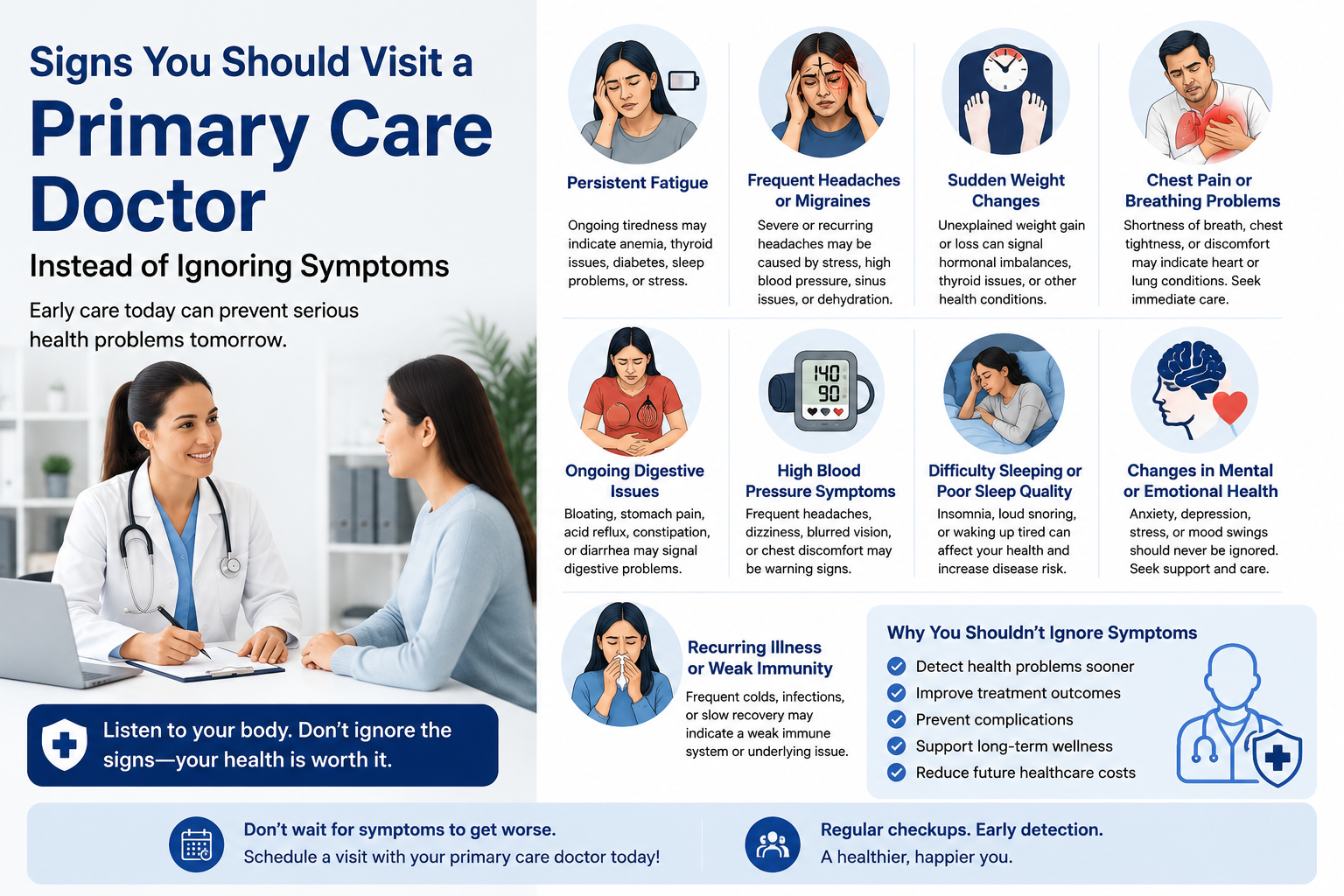
Your body often gives warning signs when something isn’t right. While it may be tempting to ignore certain symptoms or delay medical care, doing so can sometimes lead to more serious health complications. Visiting a primary care doctor early can help identify health issues before they become severe and ensure you receive the right treatment at the right time.
Primary care physicians play a vital role in preventive healthcare, helping patients maintain long-term wellness through routine checkups, screenings, and personalized medical guidance.
Persistent Fatigue That Doesn’t Go Away
Everyone feels tired occasionally, but ongoing fatigue that lasts for weeks should not be ignored. Constant low energy may indicate underlying conditions such as anemia, thyroid disorders, diabetes, sleep problems, or chronic stress.
If rest and healthy habits are not improving your energy levels, it may be time to schedule a medical evaluation.
Frequent Headaches or Migraines
Occasional headaches are common, but repeated or severe headaches can be a sign of an underlying medical concern. Headaches may be linked to dehydration, high blood pressure, stress, sinus issues, or neurological conditions.
You should see a doctor if your headaches:
- Occur regularly
- Become more intense over time
- Affect your daily activities
- Include dizziness or blurred vision
Early diagnosis can help prevent complications and improve your quality of life.
Sudden Weight Gain or Weight Loss
Unexplained weight changes can signal hormonal imbalances, digestive disorders, thyroid issues, or other health conditions. Even small changes in weight may indicate that your body is not functioning properly.
A primary care provider can evaluate your symptoms, review your medical history, and recommend appropriate testing if necessary.
Chest Pain or Breathing Problems
Shortness of breath, chest discomfort, or tightness should never be ignored. These symptoms can sometimes indicate heart or lung conditions that require immediate medical attention.
Seek urgent care if chest pain is accompanied by:
- Sweating
- Dizziness
- Pain spreading to the arm or jaw
- Difficulty breathing
Even mild breathing concerns should be discussed with a healthcare professional if they continue over time.
Ongoing Digestive Issues
Persistent bloating, stomach pain, acid reflux, constipation, or diarrhea may be signs of digestive problems that require medical attention. Digestive symptoms can affect your overall wellness and may worsen if left untreated.
A primary care doctor can help identify the cause and recommend the right treatment plan or specialist care if needed.
High Blood Pressure Symptoms
High blood pressure is often called the “silent condition” because many people do not notice symptoms until complications develop. However, warning signs may include:
- Frequent headaches
- Dizziness
- Blurred vision
- Chest discomfort
Routine health checkups are important for monitoring blood pressure and reducing the risk of heart disease and stroke.
Difficulty Sleeping or Poor Sleep Quality
Sleep plays a major role in physical and mental health. Chronic insomnia, loud snoring, or waking up tired every morning may indicate sleep disorders or stress-related conditions.
Poor sleep can increase the risk of:
- Heart disease
- Anxiety
- Depression
- Fatigue and low productivity
Talking to a primary care doctor can help improve sleep quality and overall wellness.
Changes in Mental or Emotional Health
Mental health symptoms should be treated with the same importance as physical symptoms. Anxiety, depression, mood swings, or ongoing stress can affect your daily life, relationships, and physical health.
Primary care providers can offer support, guidance, and referrals to mental health professionals when necessary.
Recurring Illness or Weak Immunity
If you frequently experience colds, infections, or slow recovery times, your immune system may need medical attention. Repeated illness can sometimes indicate nutritional deficiencies, chronic stress, or underlying health conditions.
Early medical care can help identify the root cause and strengthen your overall health.
Why You Shouldn’t Ignore Symptoms
Ignoring symptoms may allow small health concerns to develop into more serious conditions. Early medical care can:
- Detect health problems sooner
- Improve treatment outcomes
- Prevent complications
- Support long-term wellness
- Reduce future healthcare costs
Regular visits to a primary care doctor also help build a trusted healthcare relationship focused on your long-term health goals.